Loading
The Convergence.
1943 → 1956
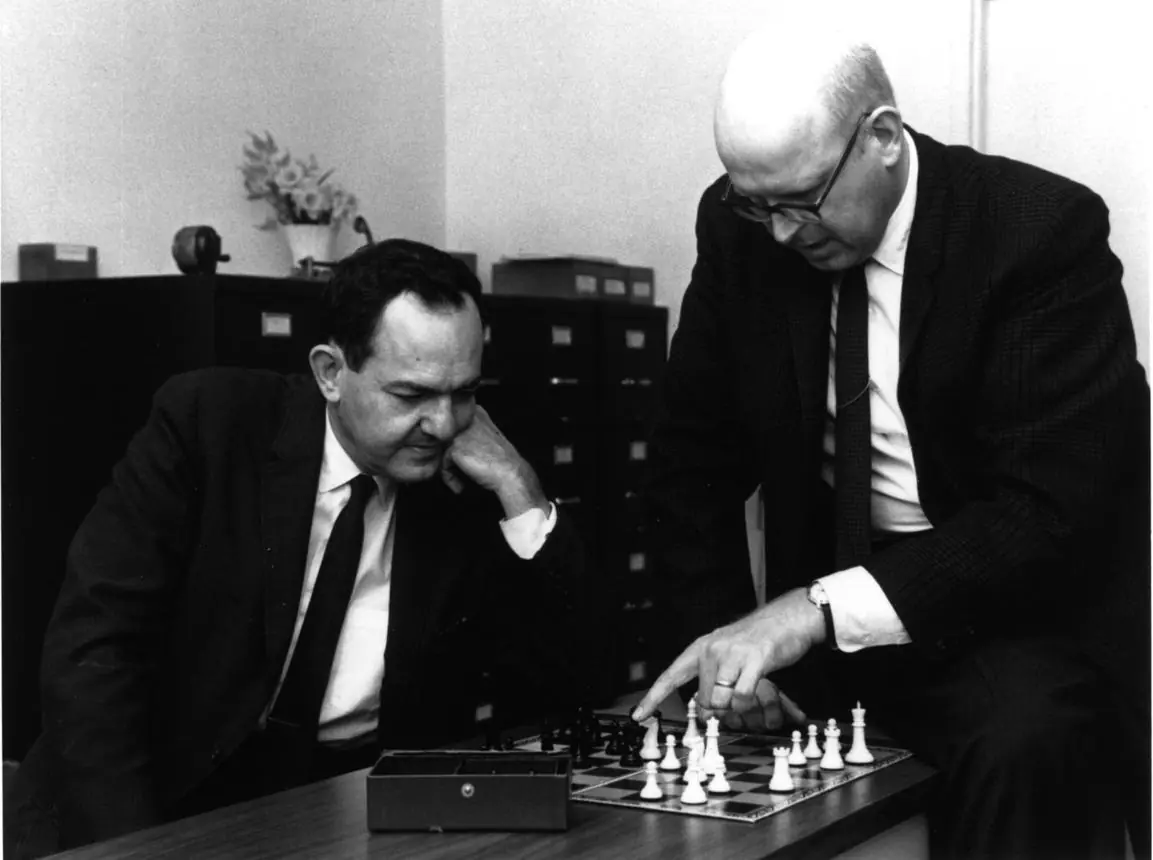
The emergence of artificial intelligence was not the result of a single invention. It was a convergence of independent theoretical developments, research communities, and methodological approaches that gradually aligned around a common question: whether intelligence could be treated as a computational object.
FACTVERIFIED
A logical calculus of nervous activity
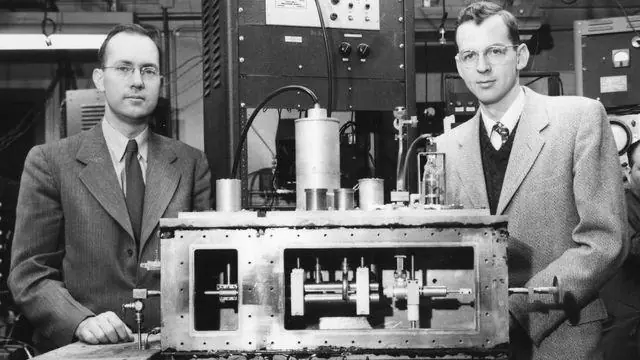
In 1943, Warren McCulloch and Walter Pitts published “A Logical Calculus of the Ideas Immanent in Nervous Activity.” The paper introduced a mathematical model of neurons as simple logical elements, capable of implementing arbitrary Boolean functions when connected into networks.
Building on Alan Turing’s earlier work on computable numbers, the model showed that brain-like structures could, in principle, carry significant computational power — more than a decade before anyone would use the phrase “artificial intelligence.”
FACTVERIFIED
Can machines think?
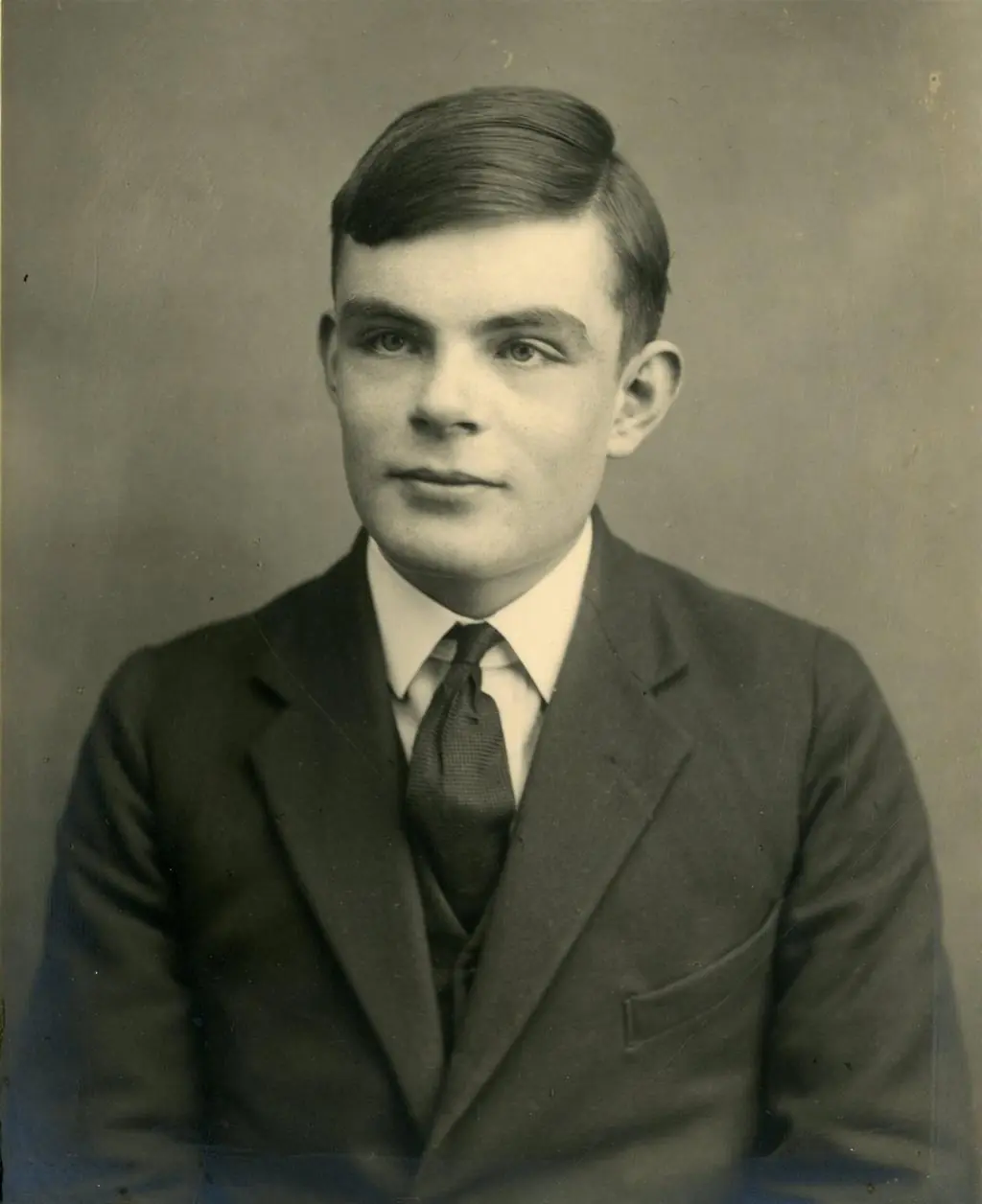
In 1950, the British mathematician Alan Turing published “Computing Machinery and Intelligence” in the journal Mind. It is widely regarded as the first systematic attempt to reformulate the question “Can machines think?” in operational, rather than purely philosophical, terms.
Turing introduced the “imitation game,” later known as the Turing test. The original setup involves three participants: a man, a woman, and an interrogator who is isolated from the other two and communicates with them only in writing, trying to determine which is which. Turing proposed replacing one human participant with a machine, and asking whether the machine could play the role as convincingly.
In this framework, “thinking” is defined not by internal mental states but by observable behaviour in a constrained communicative task. Turing did not claim to prove that machines think; he shifted the burden of proof, showing the question could be investigated empirically through computation and behaviour rather than settled by definition alone.
EVENTCONVERGENCE
Dartmouth, Summer 1956
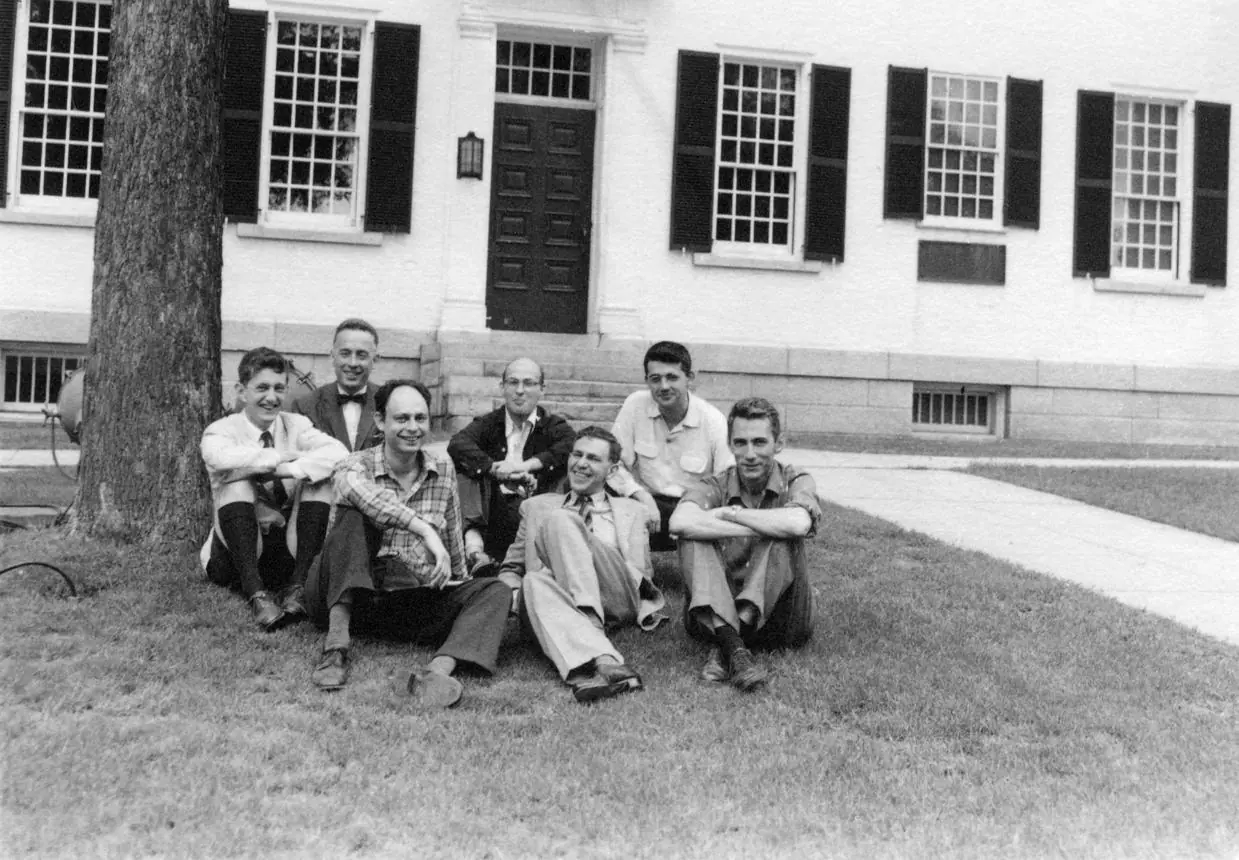
The Dartmouth Summer Research Project on Artificial Intelligence ran from 18 June to 17 August 1956 at Dartmouth College. It was initiated by a proposal, dated 31 August 1955, written by John McCarthy, Marvin Minsky, Nathaniel Rochester, and Claude Shannon. The proposal’s central hypothesis: “every aspect of learning or any other feature of intelligence can in principle be so precisely described that a machine can be made to simulate it.”
The Dartmouth workshop did not originate the ideas behind it — the McCulloch-Pitts model, Turing’s own analysis of computable numbers, and early game-playing and logic programs already existed. Its real contribution was conceptual and institutional: it brought researchers from mathematics, computer science, neurophysiology, psychology, and engineering together under a shared label, and articulated a common research agenda.
Participants included John McCarthy, Marvin Minsky, Allen Newell, Herbert Simon, Arthur Samuel, Oliver Selfridge, and Ray Solomonoff, among others. Later historiography has called it the “Constitutional Convention of AI” — not because it generated every foundational idea, but because it established the field’s disciplinary boundaries, terminology, and collective identity.
1943 → 1950 → 1956: a minimal timeline
- 1943— McCulloch and Pitts publish a formal model of neural networks, showing networks of simple threshold units can implement arbitrary logical functions.
- 1950 — Turing publishes Computing Machinery and Intelligence, introducing the imitation game and reframing “Can machines think?” as an empirical question.
- 1955— McCarthy, Minsky, Rochester, and Shannon circulate the Dartmouth proposal.
- 1956— The Dartmouth workshop convenes, consolidating prior work under the name “artificial intelligence.”
This sequence is the convergence: from an abstract model of neural computation, through an operational criterion for machine intelligence, to an institutionalised research field with a shared vocabulary and agenda.
SOURCES